


“Miss Mooney, where is Miss Blessing?” a 12-year-old African American girl named Rayne asked me as soon as I walked through the door of Bethel Chapel Church in North Philadelphia in early January 2026. Today, as we remember Dr. Martin Luther King, Jr.’s legacy of promoting freedom and dignity for all Americans, I wanted to share my recent experiences with Nyansa Classical Community, founded by Dr. Angel Adams Parham, a sociology professor at the University of Virginia founded Nyansa with the mission of integrating classical education with African American history.
For the past four years, Sarah Scudder, the wife of Bethel’s senior pastor Derick Scudder, has partnered with Nyansa Classical Community to provide after-school instruction to children from their neighborhood. In January 2025, I made my first visit to Bethel and Nyansa with a group of students from Princeton Theological Seminary. Rayne was immediately enthralled by the infectious joy of one of my students named Blessing.
“Is that a baby in your belly?” Rayne asked Blessing, who was about a month shy of giving birth to her second child.
We worked through readings from the classic curriculum like the Odyssey, as well as art and music with a lively group of mostly public-school children. Blessing first taught passionately and then sat patiently with each student for a few minutes, encouraging them.
Although Blessing hadn’t been able to come back this year, I knew she’d love it if Rayne wrote her a note. Rayne grabbed her notebook and pens and drew a picture for Blessing. Then she wrote in big letters, “I MISS YOU BLESSING!”
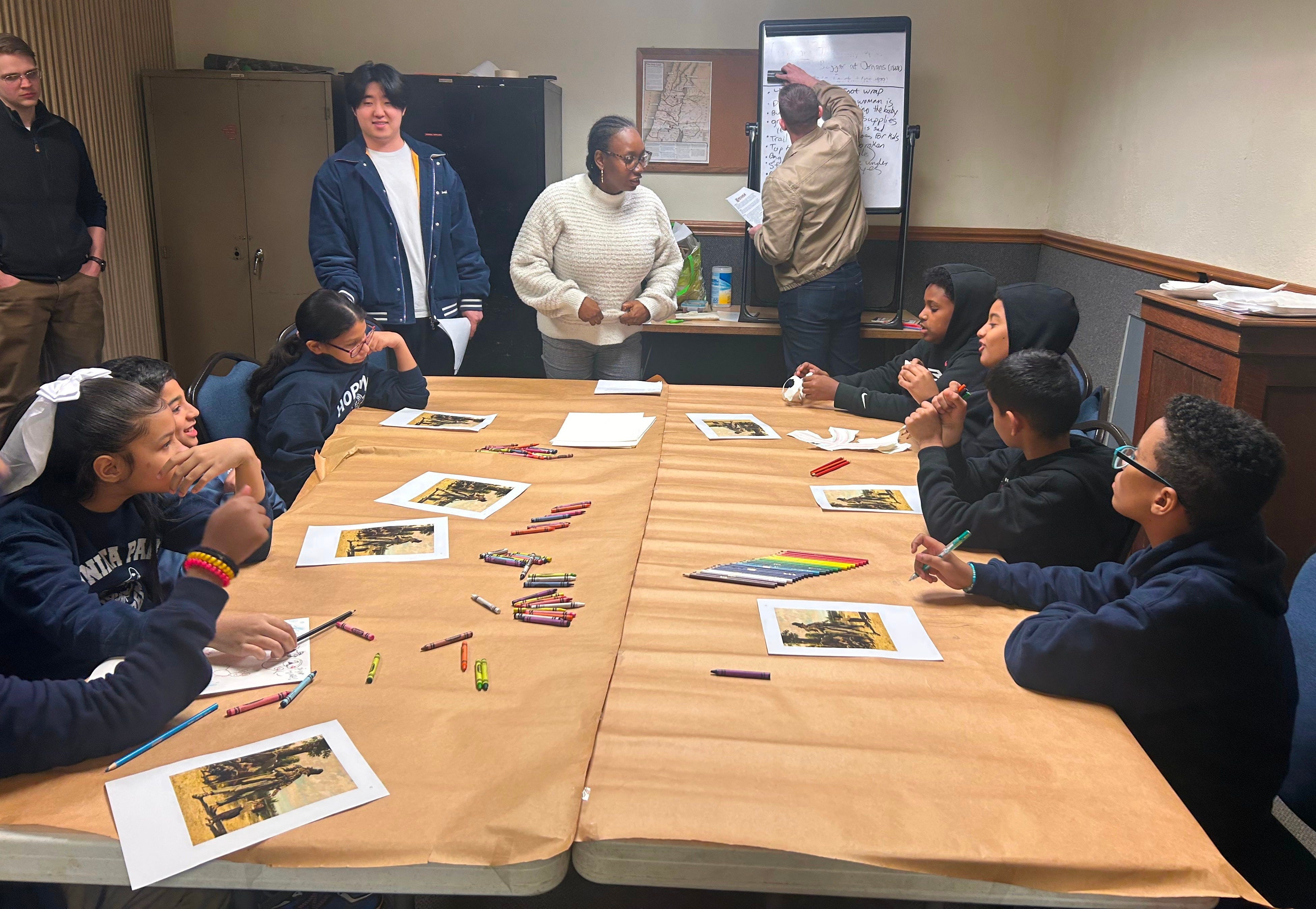
When I shared this story with Blessing over email, I could picture her smiling from ear to ear.
“I’m so glad Rayne remembers me. It’s amazing what a short encounter can mean in one’s life,” Blessing wrote.
As Dr. Adams Parham described in her book co-authored with Dr. Anika Prather, The Black Intellectual Tradition: Reading Freedom in Classical Literature, the classical tradition shaped African American intellectuals and educators, who in turn made their own contributions to those great traditions.
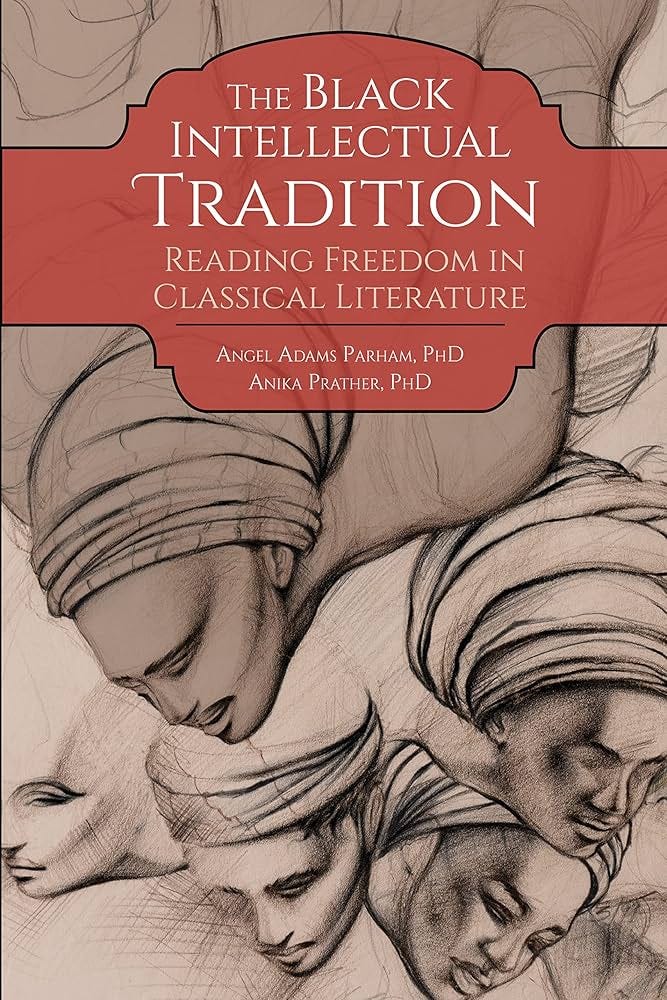
Even though Nyansa’s classical education program in Philadelphia, as in other locations, primarily reaches students of minority ethnicities, they are not apologetic about the Western classical tradition. Rather, their curriculum masterfully exposes students in their after-school programs to classical literature, art and music from the broader Western tradition but also from African American intellectuals like Phillis Wheatley and Frederick Douglass who found great inspiration in the classics as they sought to build free communities of African Americans through education.
One student in my class shared how Nyansa overturns the stereotype of classical education as elitist and classical schools as expensive. Through Nyansa, Angel has devised a low-cost way to bring the classical tradition into communities that may lack financial resources but have hearts longing for beauty, truth and goodness. Sarah, who coordinates the Nyansa after-school program for Bethel Chapel Church, has studied classical education.
But the program mostly relies on volunteer teachers. We studied their teacher’s guide, read the week’s lesson plans, and showed up ready to teach a group of children. No one in our group had ever formally studied Latin so we approached that lesson with trepidation.
An older student in my class who is a Coptic Orthodox bishop and monk with extensive experience in education and church ministry led the Latin lesson. “I was shocked that the kids were enjoying their Latin lesson!” he remarked afterwards.
One of my students remarked how she learned that we should not assume to know what kids might be interested in. Because of the personal connection between students and volunteer teachers, the kids we met we far from disengaged when we read the Odyssey and connected the story to the virtue of kindness and vice of harshness.
Making the classics accessible to them by using drawings, art, and the love of storytelling about good and bad characters, we saw how that children who may attend under-performing public schools are not incapable of engaging with classical texts.
After studying math in Nigeria, Blessing taught young girls. She quickly learned that they need a teacher who could care for their soul as well as their mind. Like too many teachers, she faced burnout.
Classical education reaches the whole child, heart, soul and mind. To develop our memory means more than memorization. Our memory is shaped by imitation. Whether or not teachers acknowledge it, students will imitate them. Students intuit what their teachers believe is beautiful, true and good. Children long to become like those they love. Too often, we forget the fundamental human needs for memory and community.
The connection Rayne felt with Blessing illustrated the principle that a teacher who knows how to make a student loved can make challenge material exciting to learn. Teaching can never be just a role or a job.
“Nyansa has got something great going on,” Blessing wrote. “Your course that exposed me to Nyansa was life transforming for me. It helped me reflect on my goal in life and the reason why I came to graduate school in the first place.”
As Sarah told my class, she hopes that when students like Rayne look back at their time with Nyansa, they remember “something that enticed them, that was beautiful, or that whetted their appetite to go back to something that they’ve learned. We aim to give them a life-long desire to learn.”
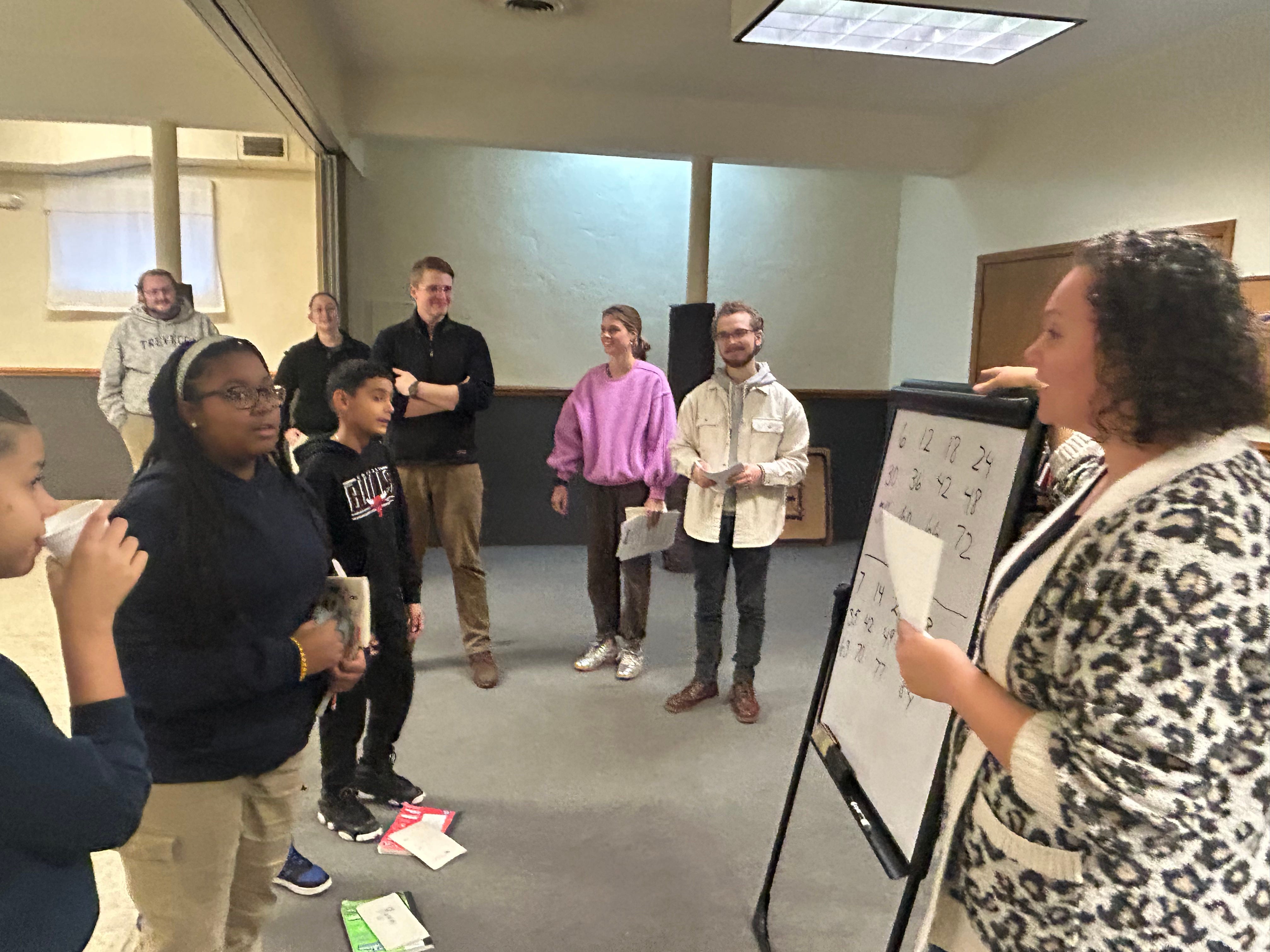
Some students who come to Nyansa are facing great challenges in reading, sometimes being several years behind. Such deficits would take more than an after-school program to overcome. At Nyansa, their programs start with Scripture and with love. Nyansa provides time for homework support in math and basic reading lessons. Then they cover supplemental subjects like art, music and great books.
Each week, the Bible stories, literature, and Latin all focus on similar themes like love and hate, honesty and dishonesty, fortitude and courage. The content students learn aims to enlightens them about universal truths and spark conversations about virtues. The classical approach includes learning vocabulary and math skills, but also logic and reasoning, which helps the students better understand the Bible the Christian faith.
When we helped teach in January 2026, one of my students, an experienced classical educator, brought his guitar and showed them a song he had written about the Odyssey that mimicked the structure of Twinkle, Twinkle Little Star. Despite some initial resistance, every student at the table wrote their own lyrics and sang their songs. One young girl aged nine even wrote her own guitar chords!
Nyansa Classical Community offers classical educational resources to communities, churches and families regardless of their economic status. As of early 2026, around fifteen groups were using Nyansa’s curriculum, and they hope that expands each year.
As Sarah explained, “The money is not what is driving this. We do our little piece, and we try to bring Christ to that. Therefore, we don’t have to do everything, because the ultimate gift is God’s grace. We trust in that.”
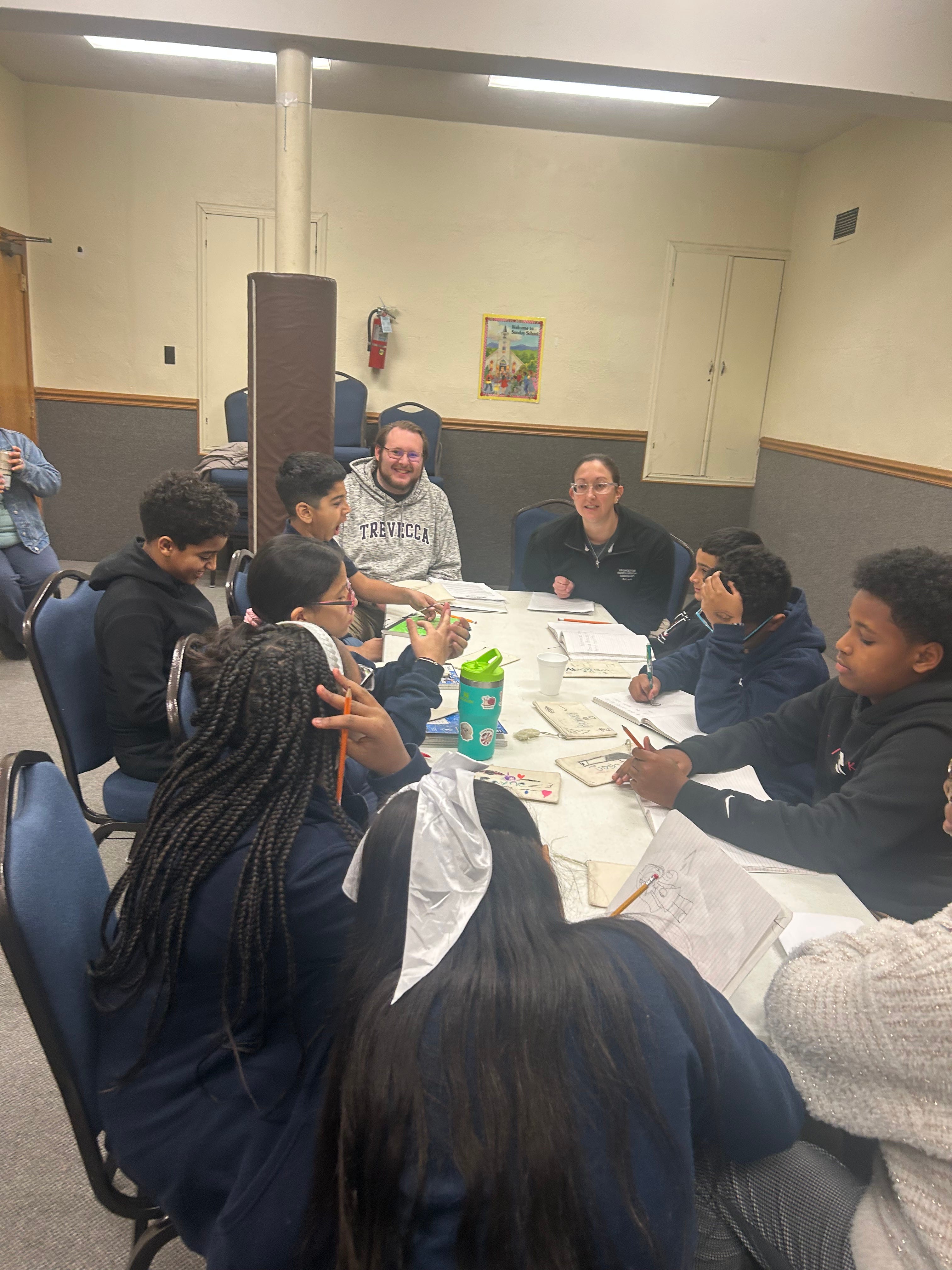
I hugged Rayne goodbye after our January 2026 visit. Then I pondered how even a few hours with something beautiful and sharing in that beauty with others journeying towards God who is all good, can be life transforming for both students and teachers.
Thanks to my class readings and our experience like Nyansa, I’ve seen students like Blessing embrace their vocation to teach and students like Rayne break stereotypes, fall in love with learning, and create beauty to share with others. The communities which have grown around Nyansa’s unique approach to classical education show how moments of grace, of true communion with others become lasting memories which become wellsprings of purpose and motivation to share our loves and our knowledge with others.
I encourage you to read more about Nyansa, support their programs, and, if you are a classical educator or church leader, you can buy their curricula and even consider partnering with them!
The way Nyansa tackles the elitism perception head-on is smart. Connecting virtues across Bible study, literature and Latin in weekly themes is way more cohesive than most curriucla I've seen. The detail about the nine-year-old writing her own guitar chords for an Odyssey song shows how underestimated kids capacity for complex material really is when they're engaged. I worked in afterschool programs before and the volunteer model raises sustainability questions tho.