


Dear Friends,
Following my lecture on January 29, 2026, to about 30 PhD and Master’s students at Columbia Teachers’ College in Manhattan, one audience member, who is also a young Catholic priest doing a PhD at Columbia in Education and Psychology said to me with his eyes wide open:
“You just jumped into the lion’s den!! You critiqued John Dewey at Columbia!!!??”
Dewey taught education and philosophy at Columbia for 25 years, and to this day, its school of education thinks of Dewey as its most influential figure—past and present. Perhaps no one more than Dewey has had an impact on American education, especially public K-12 education.
As I entered ‘the lion’s den’, I posed for this picture at Dewey’s bust. Why am I frowning? I admit—I was fearful I’d be ridiculed or mocked for my talk, which explicitly contrasted Dewey with Catholic philosopher Jacques Maritain.
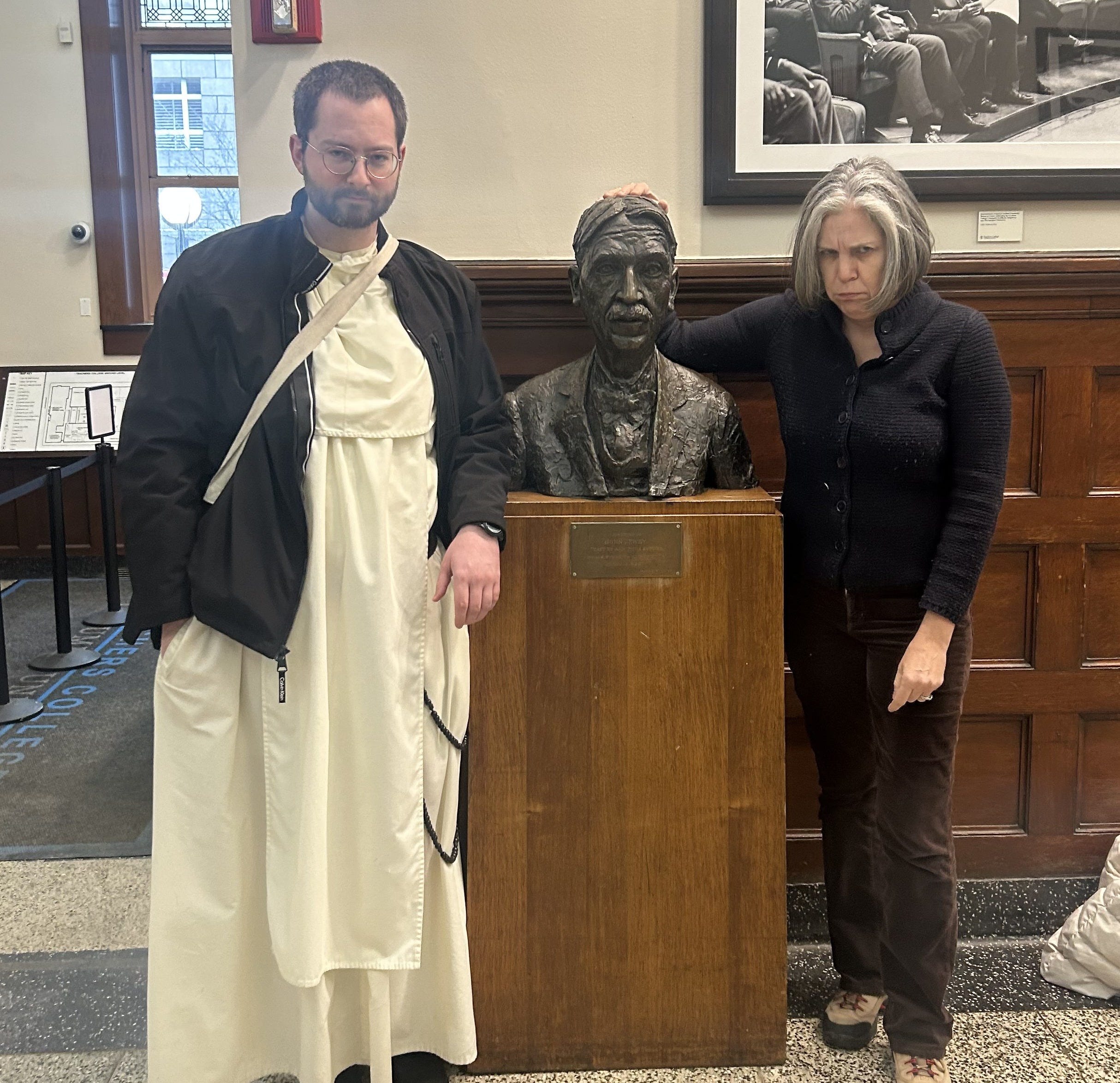
But I was also frowning because I care about happiness. The reason I began reading educational philosophy about 15 years ago is because too many students are NOT happy.
In the questions after my talk, I kept coming back to the heart of the Maritain’s concerns about Dewey. John Dewey’s philosophy purportedly contains all we need to understand all of reality, and he proscribes a path of life-long inquiry into truth that he thinks will leads to personal happiness. But I agree with Maritain that any philosophy of the human person that overlooks that we are fallen and in need of God’s grace does not produce joy.
The progressive fallacy—that we need not worry about our sins—which arises from Dewey’s pragmatism replaces dependence on God with dependence on ourselves. Dewey places faith in human cooperation; but without God’s grace can we truly love our neighbors as they are, which is far from perfect?
An hour before my talk, I had warmed up my soul by going to Corpus Christi Catholic Church just one block away. I sat in silence in this stunningly beautiful church where many Columbia converts have worshipped, including monk and author Thomas Merton. I contemplated Christ on the cross, Christ in the Eucharist, Christ in Mary’s womb. I prayed the rosary. I asked the Holy Spirit for the words to say and the demeanor to say them with love.

Why was I at Columbia? I had been cordially invited by the professor who leads Columbia’s program in educational and philosophy. He’s keenly interested in the vocation to teach, and what it means to be present with students. When we spoke to plan my visit, knowing I’m Catholic, he encouraged me to be explicitly theological in my engagement with Dewey.
If I live by grace, can I be honest by that from the podium at Columbia? Or should I hide it? I accepted the invitation to be authentic.
My talk focused on one of my favorite conversation partners, Catholic philosopher Jacques Maritain, whom few students in the room would have heard of. I spent the first half an hour of my talk going through Maritain’s biography. Maritain wasn’t always Catholic—he tried on just about any and every form of secular philosophy looking for a total explanation of reality. When his search turned up empty, he contemplated suicide. He was drawn to the Catholic faith at first through the arts—poetry, art and music. It was a combination of deep prayer and deep reading of Thomas Aquinas that solidified his conversion to the Catholic faith.
Like Dewey, Maritain was a man of the world, a public philosopher, and committing to dialogue with those who were different from him. Speaking at Yale in the mid-1940s, Maritain critiqued Dewey because, as good as his educational methods were, they were limited because he neglected the spiritual side of the student, at least as Maritain understands the term spirituality.
One major critique of Dewey which I pointed out is that in Dewey’s book A Common Faith, he aims to separate religious values from “encumbrances” like religious creeds or rituals. The creation story in Genesis says humans are made in the image of God but fallen in sin. Should we now just dis-regard religious revelation, creeds and rituals because we have scientific truth reached by the scientific method, as Dewey says? Why would any religious values survive at all in what Maritain saw in Dewey: a stony, positivist (ie., materialistic, de-sacralized) vision of the person?
Are we creatures in need of God’s grace for our personal growth, as Maritain says, and as most people throughout history would have agreed?
The majority of students in the room seemed to sincerely believe that spiritually without any creed is more conducive to human flourishing than one with a creed or revelation from God of any kind—not just for themselves but for students in our schools.
I see Dewey’s self as an endless “doing”, never resting, never contemplating anything so real, so intimate to us, but yet also mysterious. If there is any God in Dewey’s system, it’s not one we can relate to personally, much less one who seeks us out in loving mercy.
If we remove from society and education the idea that God is a real being, not just a psychological fiction the self uses to rely more on itself, do we not take away the joy that comes from being loved as we are—sinners in need of mercy?
I asked the room: is it really enough to tell the next generation of students to look inside themselves for the power to integrate the parts of themselves that feel fragmented? If the self is so fragmented and distracted, how does looking inside ourselves also lead us to the principle by which we can make ourselves whole rather than just deepening our confusion and misery?
When I asked, "Honestly, how well is that really working for our students?” the room burst into laughter.
I think Maritain was right when he said that humans are created for great things. But the principle of growth in the good is not the self itself, but rather the self encountering God’s grace. That loving encounter allows the student to overcome vices of laziness and selfishness and grow virtue, which is the only sure path to happiness.
It is not more reasonable to think that something outside us, bigger than us but capable of loving us, can make us feel whole and lead us towards our purpose?
I enjoyed the presentation and conversation immensely. as I believe everyone in the room was sincerely seeking truth through open conversation. Dewey, like many others I may disagree with, would have welcomed such open, constructive dialogue across differences. So would have Jacques Maritain. Numerous people of religious creeds, including Catholics, are graduates of Columbia Teacher’s College. The openness to the Catholic faith by those outside the church was in fact very heartening to me, a sign that Catholic voices can be heard and taken seriously in the academy.
I noted that the poster advertising my talk said Princeton University, not Princeton Theological Seminary. And the title I gave for the talk emphasized story and the importance of the humanities. The term ‘graced imagination’ could be used to describe a non-personal, non-Trinitarian God. But that’s not what I mean by that term. Like Maritain, I worry that without God’s grace the deepest recess of our souls can be dark, not light. We need God’s beauty to shine light into the world and in our hearts.
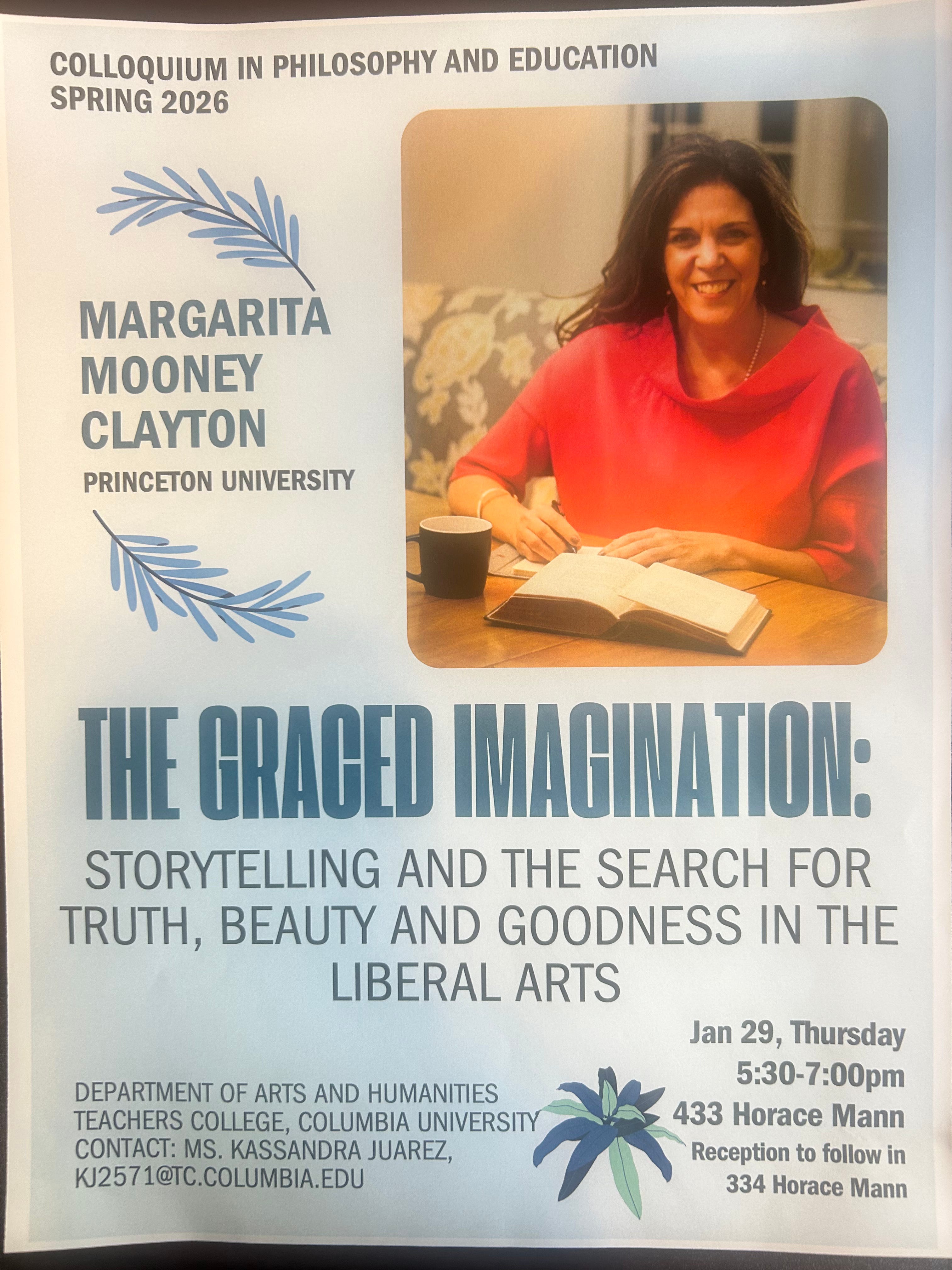
After the talk, one student wrote to me, asking for more resources on my comment that beauty is God’s splendor radiating into the world. “I am so grateful that you spoke at Columbia, as it has openego the door to all of these avenues of thought development, which I find really exciting,” she said.
I have no doubt that most students in the Ivy League are seeking the truth, as only the truth can make us free and happy. But many students in the Ivy League read progressive philosophers and few encounter theological philosophy.
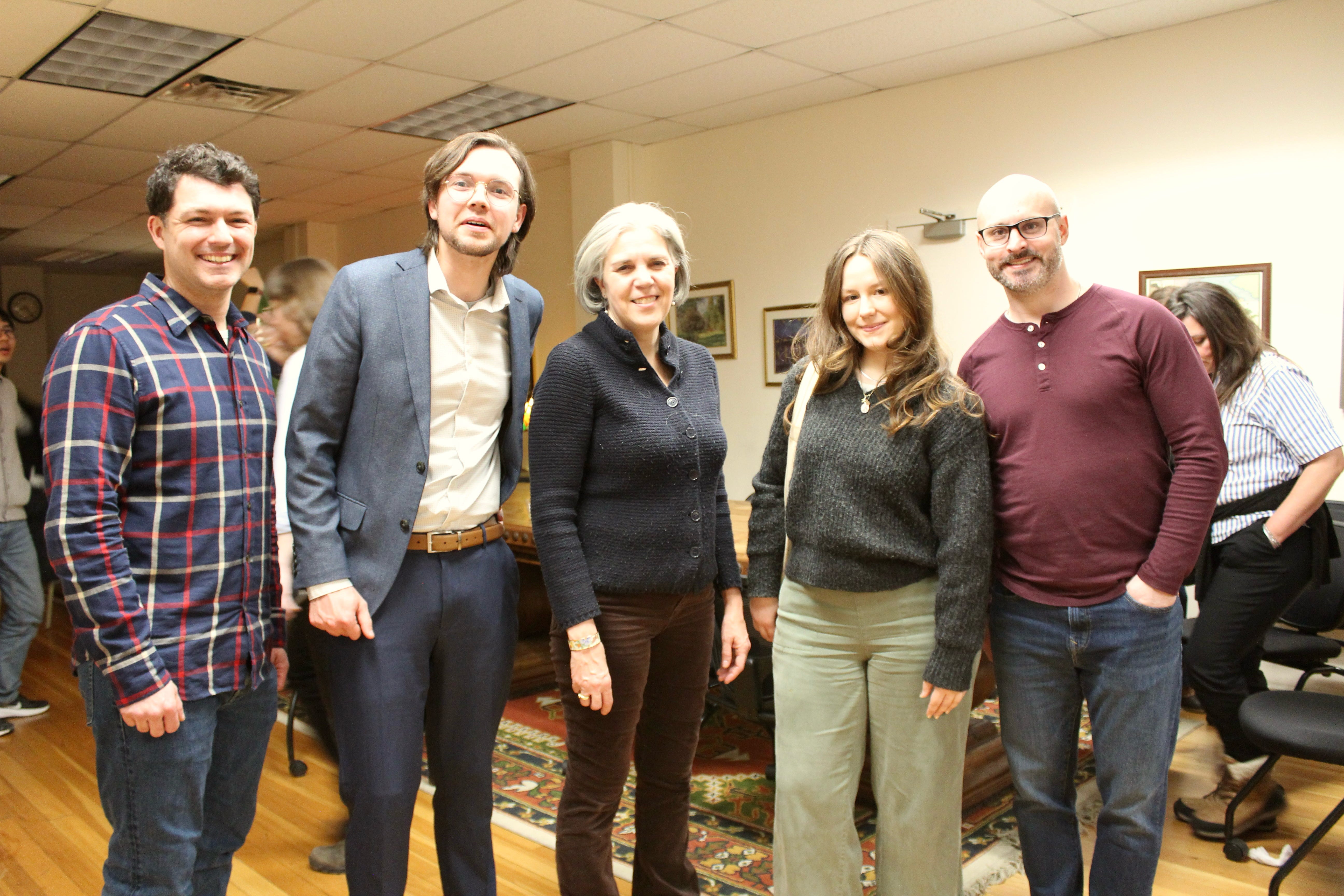
Perhaps the tide is turning. For all those who attended my talk last week, thank you for your honest seeking to understand my theological perspective. I chatted with numerous students at the reception, and have heard from many of them over email, seeking to understand more of what I said.
There’s enough to write about Dewey and Maritain on education, the human person and beauty to fill one more books.if you want my book recommendations, you can start with my books The Love of Learning and The Wounds of Beauty, which themselves contain extensive references for further reading. See also below for some of my videos where I discuss Maritain and Dewey.
For those of you who want to be happy, I encourage you to learn more about you can connect to the Scala Foundation’s Way of Beauty fellowship, mentorship and curriculum which we describe on Scala’s website.
See This video where I discuss Maritain’s ideas about virtue in education.
And this video where I discuss Dewey’s pragmatism that leads to a materialist view of the person.