Dear Friends,
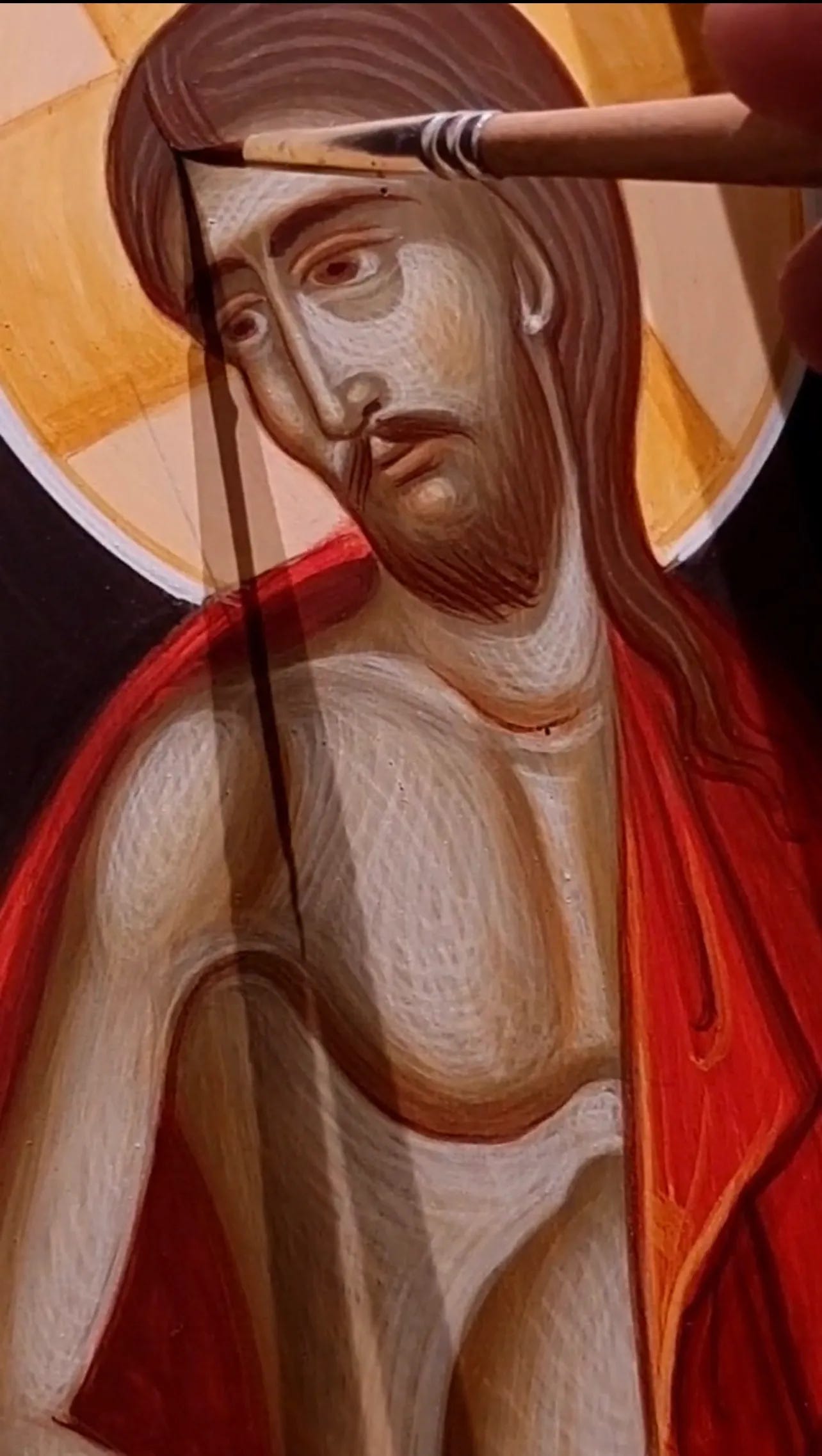
“That’s SO satisfying,” my 11-year-old niece cried out as she stood enraptured as my husband, David, painted in his home art studio. “He paints right up to the line but does not go over!”
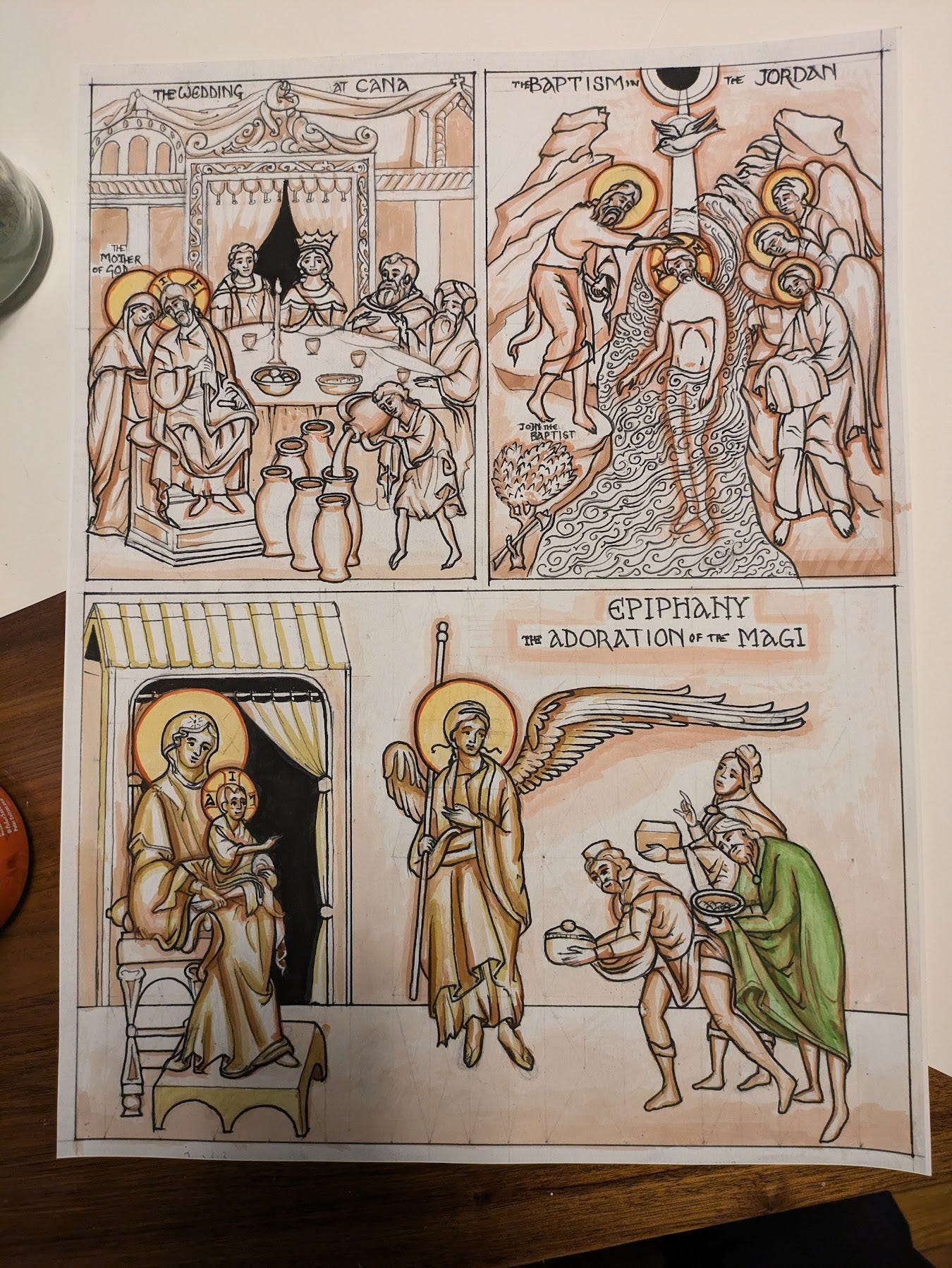
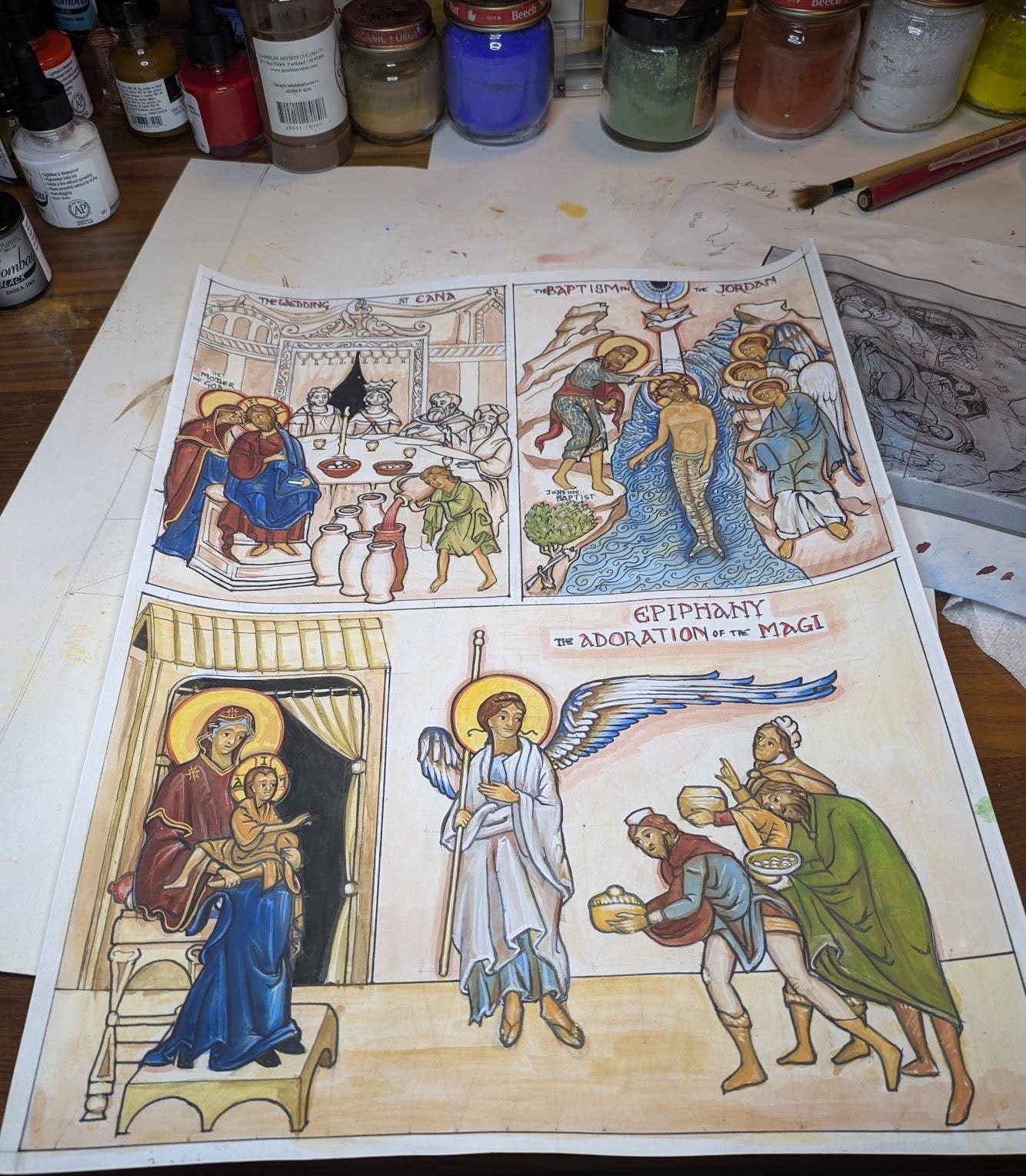
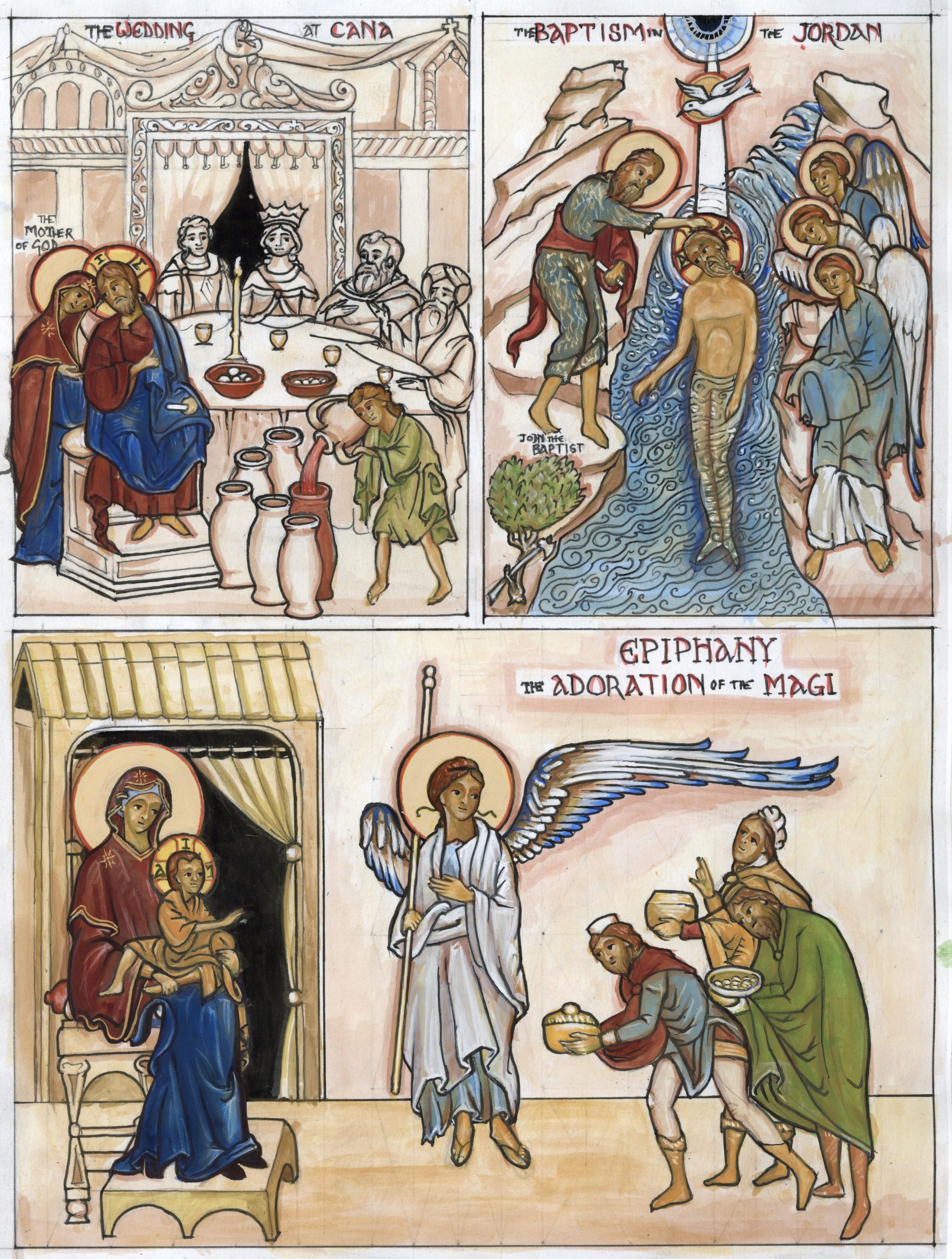
David began that particular piece of art with a carefully drawn black-and-white sketch of the Miracle at the Wedding of Cana. He then picked up very fine brushes, mixed pigment with acrylic ink to his own invented tempera paint formula, and filled in between the lines, being sure not to go over.
A few minutes later, the Master and young apprentice sat together with identical black and white sketches of a bird. The young art student beamed as she picked up her brush, mixed her colors, and painted. Her proud mother took her art home to hang up on the wall.
Since marrying David just three years ago, I’ve noticed that people who visit our home are as interested in the process of creating art as in viewing the final product. Some of the questions he often gets are: Where do you get your pigments? How do you know what colors to choose? What do you use the ruler, compass and magnifying glass for? How long does it take you to finish a painting?
I mostly lecture about the virtues of art, but consider myself downright remedial when it comes to making art. I just can’t seem to imitate or reproduce anything, much less imagine for myself what to put into a piece of art. At best, I can do a few squares with arrows; perhaps I can draw some letters with a touch of calligraphy. But I do love interior design—picking small objects to light up a room, setting the table for various seasons and special feasts, and adding colorful cushions to sofas and beds.
But it was the zeal of a child, willing to try new things just because they are fun and beautiful, who inspired me to pick up a brush this summer.
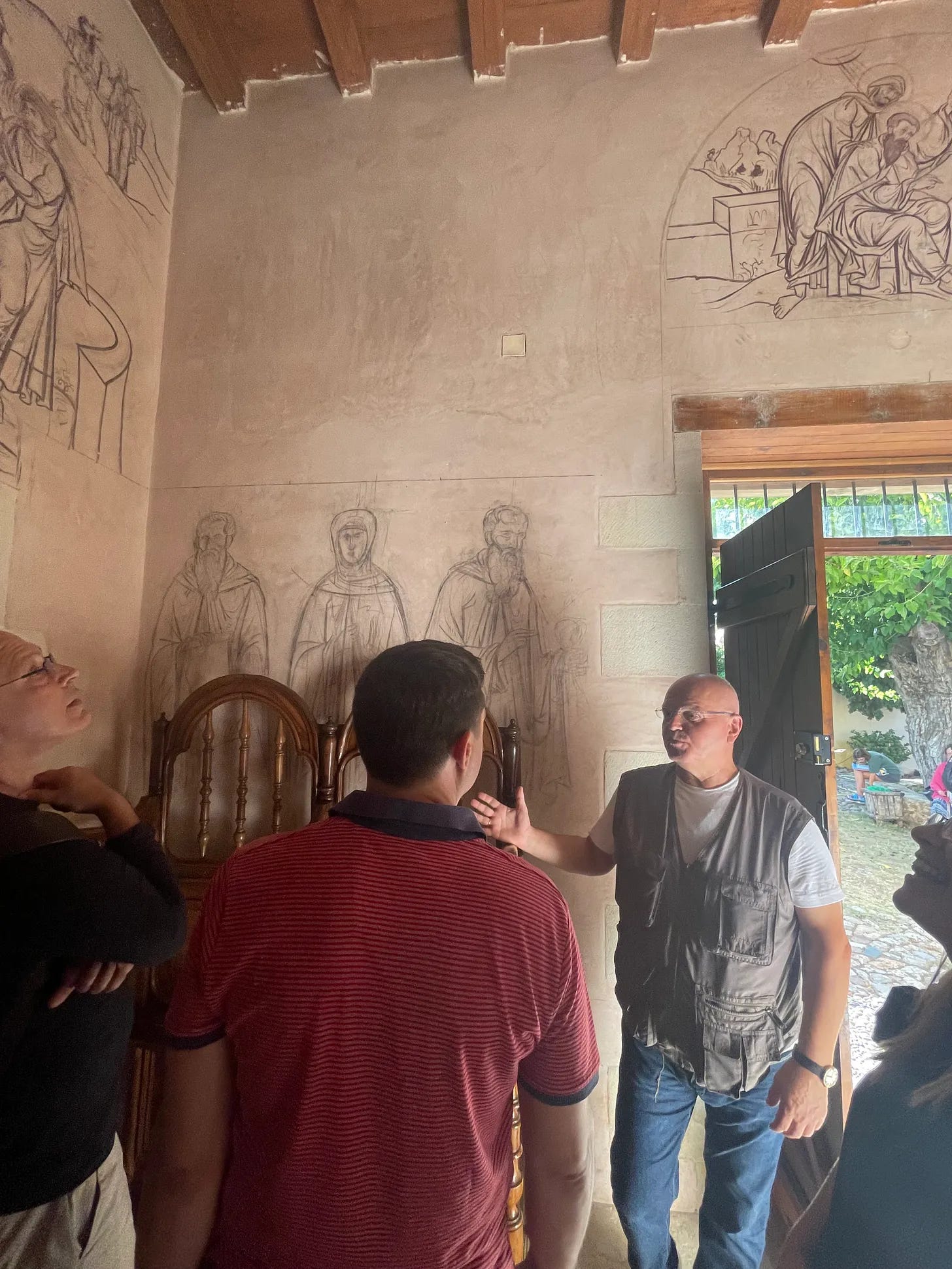
Thanks to the vision of iconographer George Kordis, founder of Writing the Light, a school of iconography, I’ll have the chance to unlearn the skills that hold me back from making art when I attend his summer icon school in Crete in August 2025.
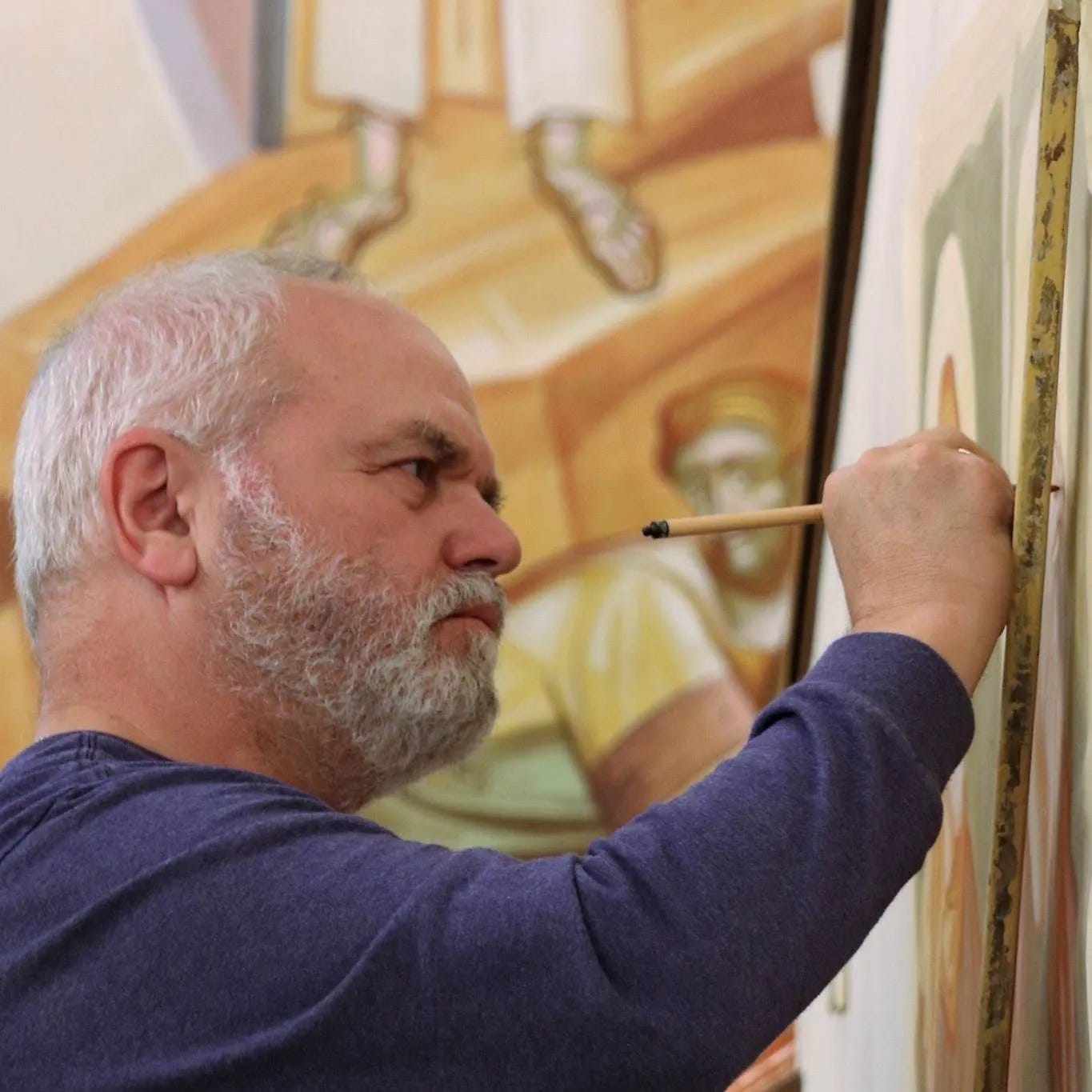
George’s vision is to bring iconographic practice not only to professionals like David (who first studied portraiture, landscape, and iconography) but also to anyone who commits to learning from a Master artist and teacher such as himself, regardless of their artistic skill. The workshop welcomes anyone from any faith tradition (or none) and of any skill level (or, in my case, no skill). George and his assistant, Keri, kindly invited both David and me to give talks to the art students.
Building on my talk at the conference with Blackfriars Hall, Oxford University, last week, I will share with the art students about The Vocation of an Artist. I’ll examine the artist's role as co-creator with God, contrasting this view with the notion of the artist as a demi-god who expresses not only himself but the collective conscience of society. Building on Pope John Paul II’s 1999 letter to artists, I will highlight the dynamic relationship between artists and the Church, as well as the connections between sacred art and secular art.
In a second talk, I will share thoughts on Why Everyone Should Study the Practice of Art. I will explain why and how to integrate artistic traditions throughout education, not just in dedicated art classes, but as a fundamental form of learning and communication in the sciences and humanities. I will share practical ways to incorporate artistic practice into daily life and how the process of making art can build friendships and community.
David will speak about The Re-Establishment of Iconographic Tradition in the 20th Century, exploring the fascinating story of how, after centuries of decline, iconography was revived as an artistic tradition in the Byzantine churches. Through our work at Scala, we are hard at work drawing lessons from this revival that can guide us in re-establishing a broader culture of beauty today, with applications extending beyond iconography to other fine arts such as music, architecture and film.
David will also share his insights on Balancing Naturalism and Idealism in Christian Art. Using iconography as a prime example, David will demonstrate how all Christian representational art forms successfully balance naturalism (reproducing what we see) and idealism (perceiving order and harmony in form). The talk will show how other artistic traditions have achieved this balance and explain why studying iconography benefits artists working in any medium.
You don’t need to go to Crete to learn from George Kordis. Writing the Light offers online classes and residential programs in the US and other locations in Europe as well.
If you write a line, pick up a brush, and color it in, you just might have that feeling of satisfaction my niece enjoyed. Co-creating with God is profoundly satisfying in a way no form of being entertained could ever compete with. Every day I see new resources emerging for homes, schools, churches to gather people into community, learn from a Master about the best traditions in fine arts, and bring light to the world.
Regards,
Margarita Mooney Clayton, Ph.D.
Founder and Executive Director, The Scala Foundationwritingthelight.com