


Dear Friends,
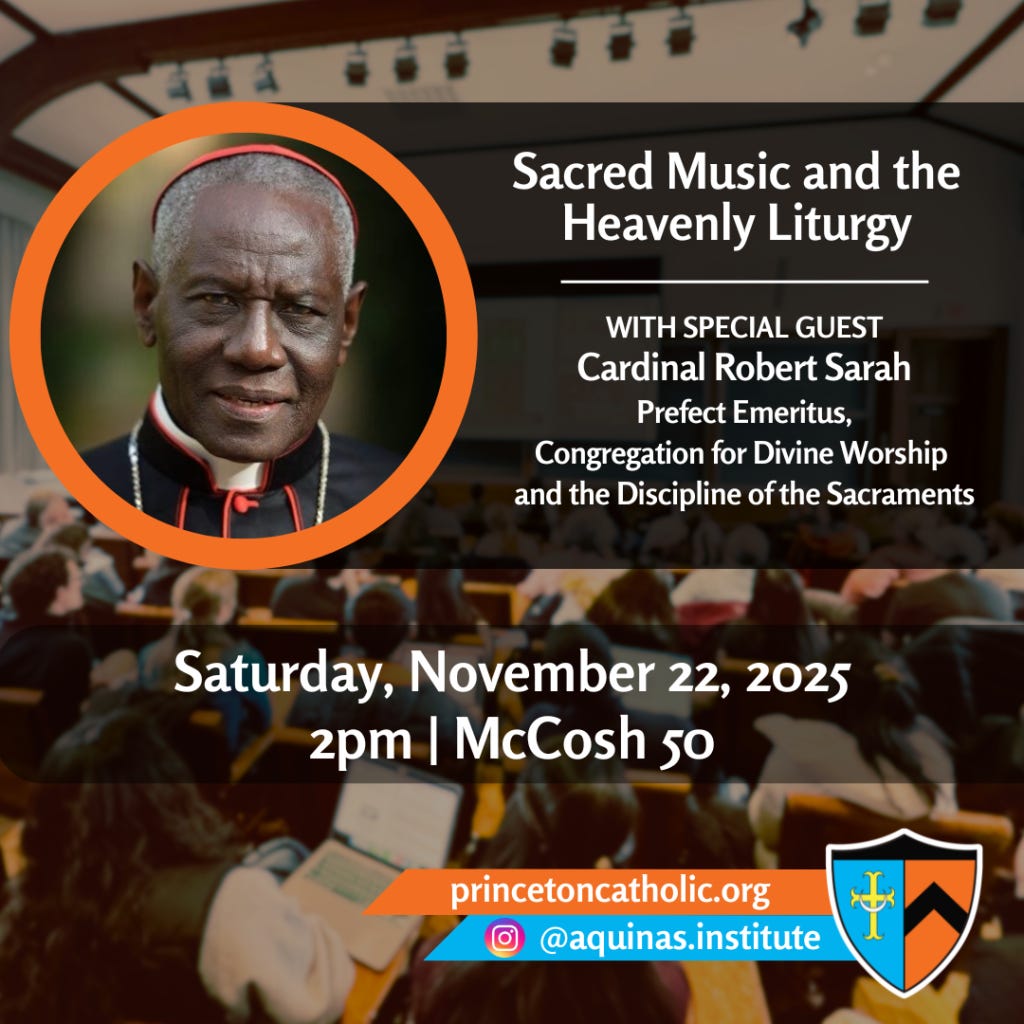
In less than two weeks, Cardinal Robert Sarah will wrap up his visit to Princeton with a dinner at my home. I am honored to host Cardinal Sarah, whose writings on music, silence and the human heart’s need for God remind me of another African of long ago: St. Augustine.
Cardinal Sarah, who served his flock in his native Guinea before moving to Rome, is the Prefect Emeritus of the Congregation for Divine Worship and the Discipline of the Sacraments.
How does sacred music touch the restless hearts of so many today? Why is traditional sacred music becoming so popular again among young people and seekers? What makes for an exciting experience of worship, one that reflects the sober inebriation with the spirit on the move in the world today, not merely an emotionally charged worship service?
I hope that in his public event at Princeton on Saturday, November 22, 2025, Cardinal Sarah will address those questions and many more.
[To register for in-person or online attendance of this event, visit the event page].
Cardinal Sarah is a strong supporter of and collaborator with Peter Carter, who is the music director at Princeton’s Aquinas Institute and founded The Catholic Sacred Music Project. Peter’s friendship with Cardinal Sarah led to a new book based on their conversations, “The Song of the Lamb: Sacred Music and the Heavenly Liturgy.” I was privileged to read the book and share my thoughts on it with Peter as he revised it for publication with Ignatius Press (it is now available from the publisher and on Amazon!).
Here are a couple of quotes from an article by Cardinal Sarah that I teach in my class on beauty in Christian education and worship.
“If our intellects can no longer close their eyes, if we no longer know how to be quiet, then we will be deprived of mystery, of its light, which is beyond darkness, of its beauty, which is beyond all beauty. Without mystery, we are reduced to the banality of earthly things.”
Too many find their educational experiences, either explicitly or explicitly leave them with spiritual problems, describing their lives with terms such as:
Banal. Bored. Blame. Being Miserable.
When reality is banal, people are bored; it’s then easy to blame other for our misery.
A sacred presence in worship and in life preserves mystery—each human person has a unique dignity. Wonder in education is fuel for innovation. Without innovation generosity to others, including the poor, is drastically limited to redistributing what others have produced with their talents.
In the same article, Cardinal Sarah wisely commented that being filled with God’s presence we can enter into communion with others, not try to possess one another or strive merely for material goods and achievements:
“The big difference between God and man hinges on the problem of possession….Man allows himself be caught in the nets of his lowest instincts to possess. He wants to accumulate material goods in order to satisfy himself and enjoy them. But these superfluous goods obstruct the eyes, shut the heart, and sap our spiritual energy." However, there are also many rich people who live an exceptional spiritual life with God and show immense generosity to the poor.”
As one student in my class wrote in response to Sarah:
“Have not many of our God-given tools for instinctual learning been buried in our childhood sandboxes by the twenty-first century “soul-draining” bullies of achievement, pragmatism?”
As my husband David has written about on his Way of Beauty Substack, each week we meet with students and community members in Princeton for chanting of the psalms, sharing our dreams and obstacles, and renewing our commitments to prayer, service and the pursuit of a beautiful activity. Such face-to-face meetings, called “little platoons” by Burke, long formed the backbone of American civil society and churches.
Meeting Peter Carter has ignited my own love of great sacred music. Not only do I sing with the Aquinas choir, led by Peter, each week, but Peter has also introduced me to Sir James MacMillan, the Scottish Catholic composer and conductor. In the summer of 2023, Sir James visited Princeton to assist in training new composers and conductors, demonstrating that tradition is a fountain of creativity. Those compositions and our conversations are available on Scala’s YouTube channel.
Scala is honored to support Peter’s vital work to revive congregational singing of great sacred music. David and I are delighted to help catalyze the hard work of a young and innovative cultural entrepreneur like Peter, whose friendship with Cardinal Sarah is a great testimony to how the universal love of music can bring people together.
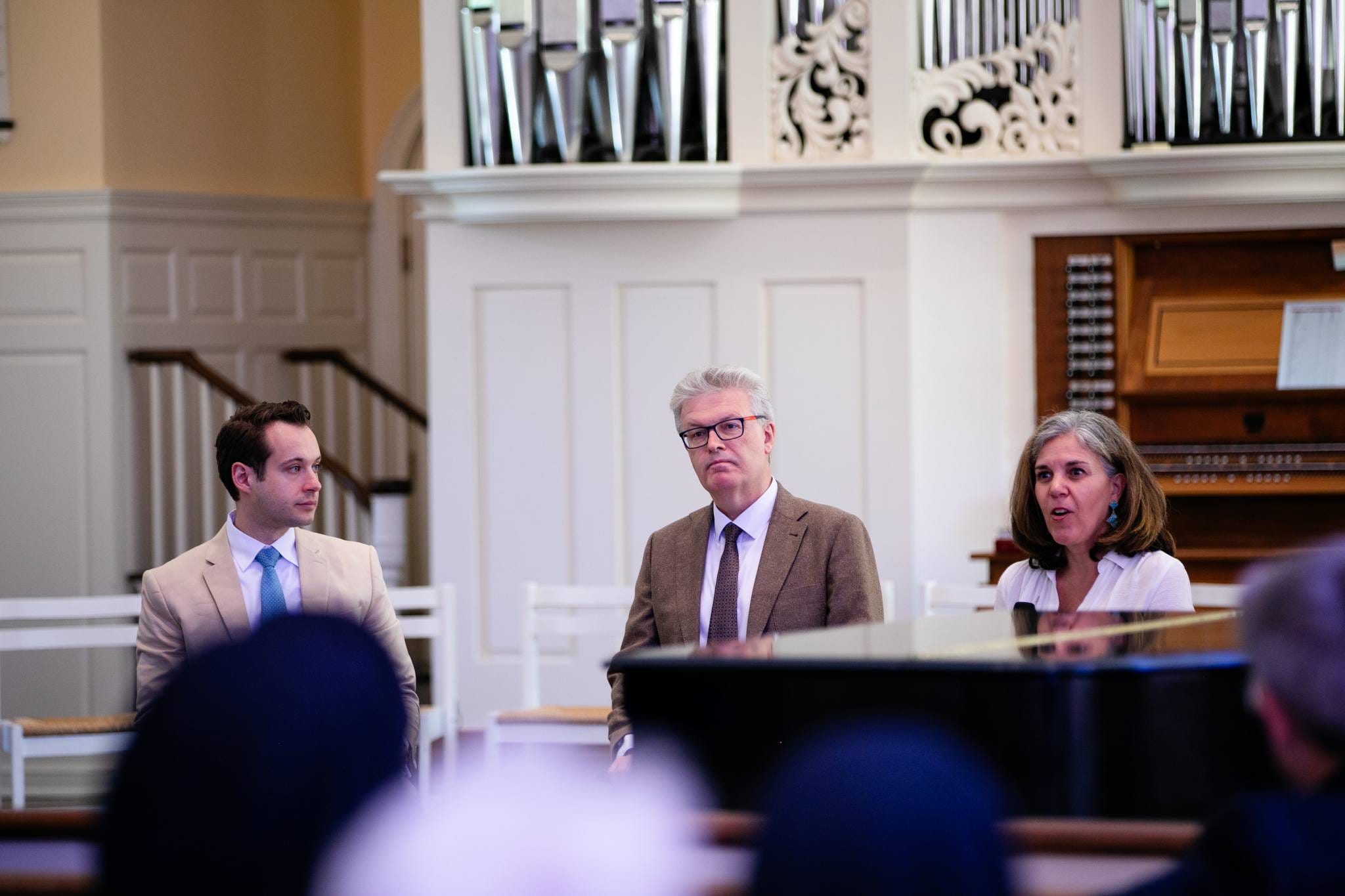
Saint Augustine’s work on music, though perhaps not as widely read as his memoir Confessions, shaped his theology and pastoral work in myriad ways. It’s now hard for me to think theologically or pastorally without music!
We hope to see you in person at this great event on November 22, 2025, in Princeton, or at another event promoting cultural renewal sometime soon.
Regards,
Margarita Mooney Clayton, Ph.D.
Founder, The Scala Foundation
How I wish my fellow Africans would cherish this man as much as the Americans do
Wow, this is so exciting! I wish we could be there for his talk. Very much looking forward to his book!